Server-Side Tracking for E-commerce: What Changes in Month One
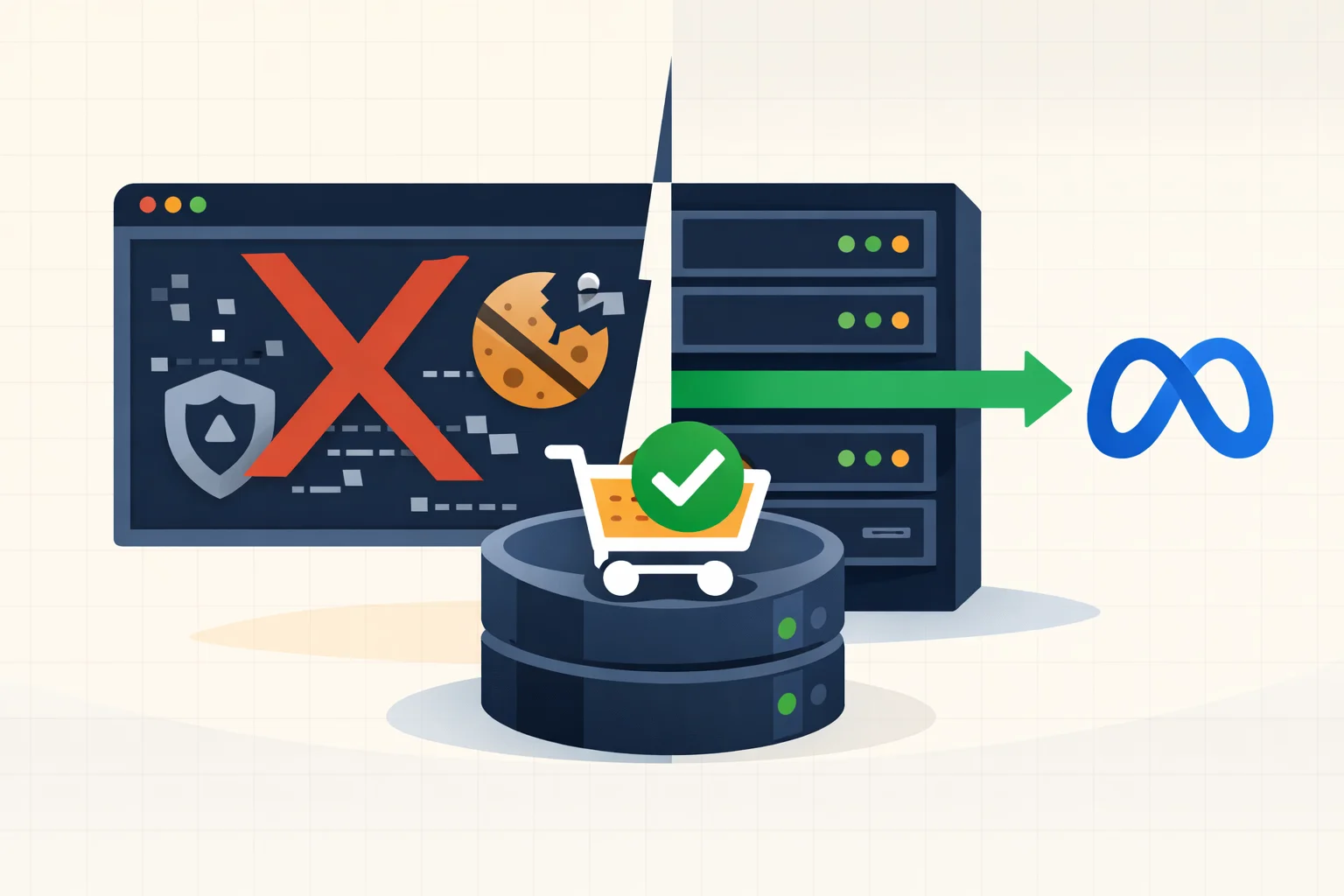
Server-side tracking for online shops, measured on real orders: what changed in the first month, why Google and Meta bidding need it, and what it cannot fix.
Tag
10 articles tagged "server side tracking"
Server-side tracking for online shops, measured on real orders: what changed in the first month, why Google and Meta bidding need it, and what it cannot fix.
WooCommerce conversion tracking end to end: what Woo records by itself, where the click trail tears, plugins compared, and numbers from real stores.
Meta CAPI Gateway explained: how Meta's no-code Conversions API option works, what it costs, its browser-only blind spot, and when direct CAPI setup wins.
Northbeam alternatives compared on vendor pricing (September 2026): cheaper tools for Shopify and WooCommerce, MMM options, AI access, and who each one fits.
In Enalitica's data, Meta and Google Ads reported as many conversions as stores had orders. What ecommerce attribution is, which model fits, how to reconcile.
Server-side tracking fixes what the browser pixel loses, yet it is still an estimate. What CAPI solves, what it does not, and where orders differ.
Meta CAPI in server-side GTM: three setups compared (custom HTTP tag, partner plugin, order-based capture), with trade-offs, costs, and where each fits.
Triple Whale alternatives checked on vendor pricing pages, September 2026: free, cheaper, EU-hosted, profit tracking, what replaces Moby. Where we lose, too.
Meta Conversions API (CAPI) explained: four required parameters, access token, event_id deduplication, 7-day event_time limit, plus what CAPI cannot measure.
Learn how multi-touch attribution models work, why traditional tracking is breaking, and how order-based attribution gives e-commerce stores the full picture.