Advertising
When to Pause a Google Ads Campaign: Rules, Not Gut Feel
When to pause a Google Ads campaign, decided by rules: clean weeks, break-even POAS, four verdicts with thresholds, and a countdown instead of panic.
Tag
24 articles tagged "google ads"
When to pause a Google Ads campaign, decided by rules: clean weeks, break-even POAS, four verdicts with thresholds, and a countdown instead of panic.
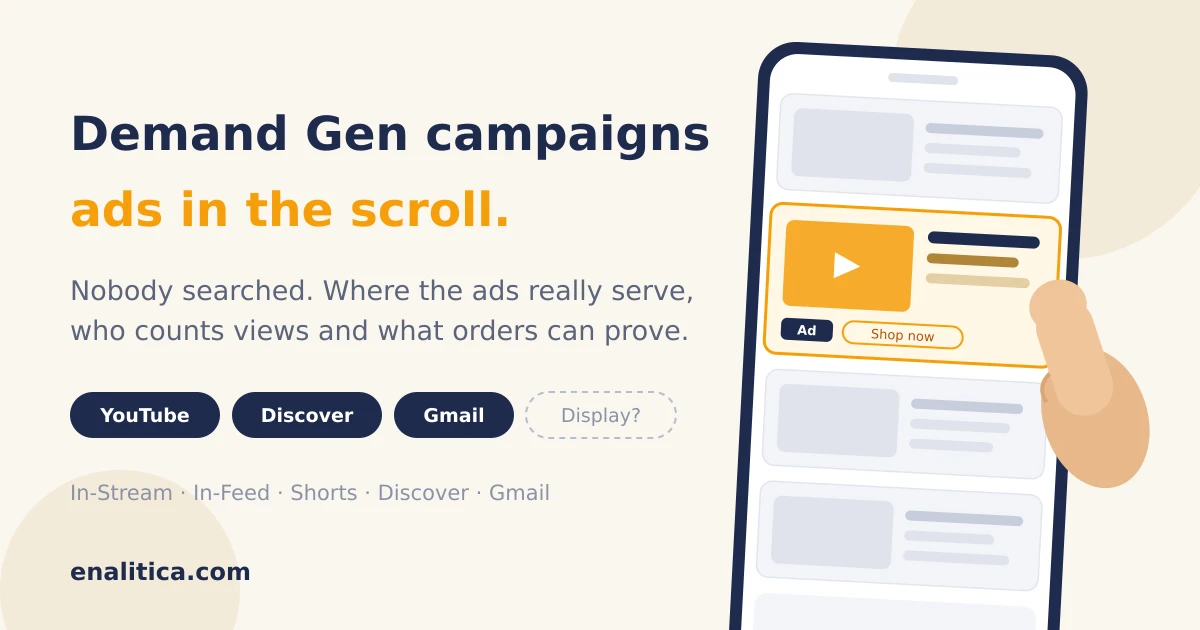
Demand Gen campaigns run on YouTube, Discover and Gmail. Where Display hides in the settings, how Google counts engaged views and what real orders prove.
AI Max for Search campaigns switches on automatically in September 2026. Which campaigns are affected, how to avoid the upgrade, and how to audit what it buys.
Performance Max campaigns quietly serve your own brand searches. What you still control, how to set brand exclusions and how to verify PMax on your orders.
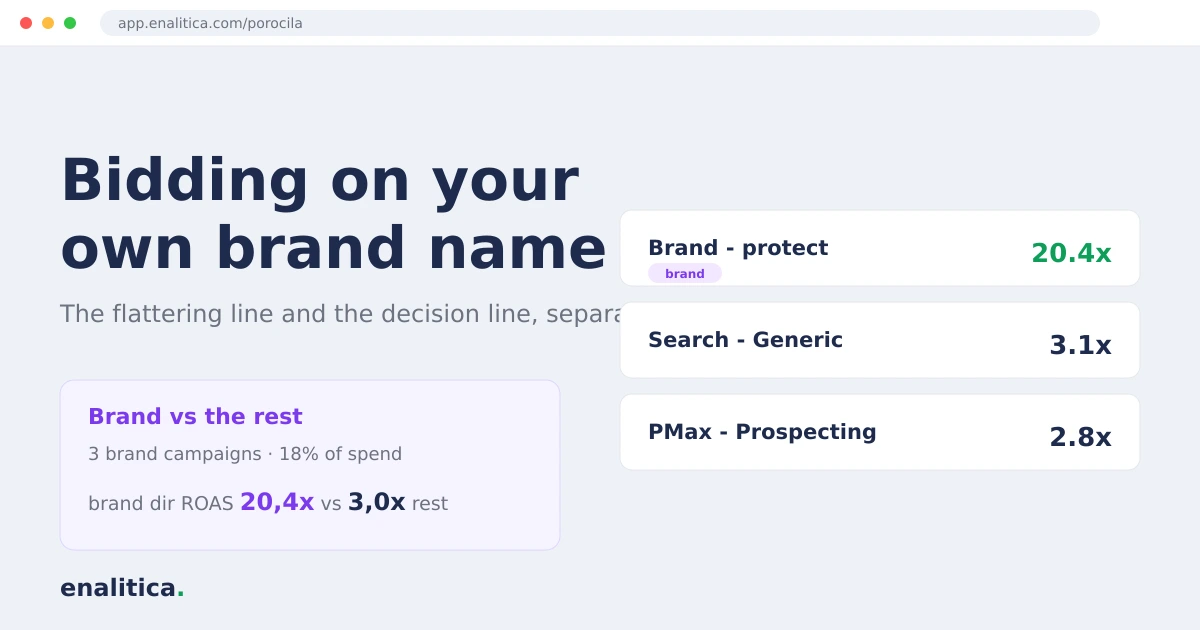
Bidding on your own brand name flatters ROAS while organic absorbs most clicks. Data from 225 geo tests, when brand bidding pays off, and how to test it.
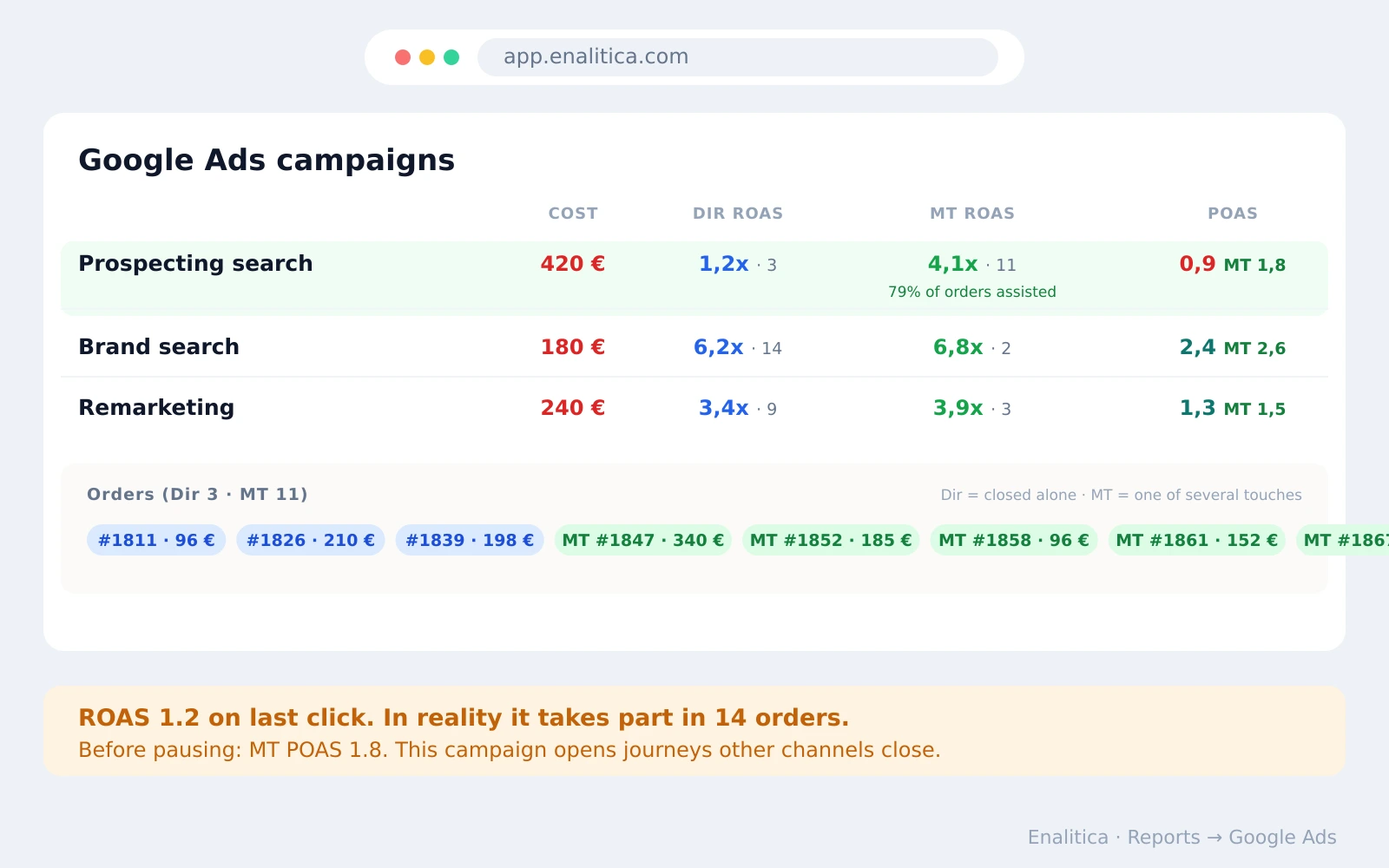
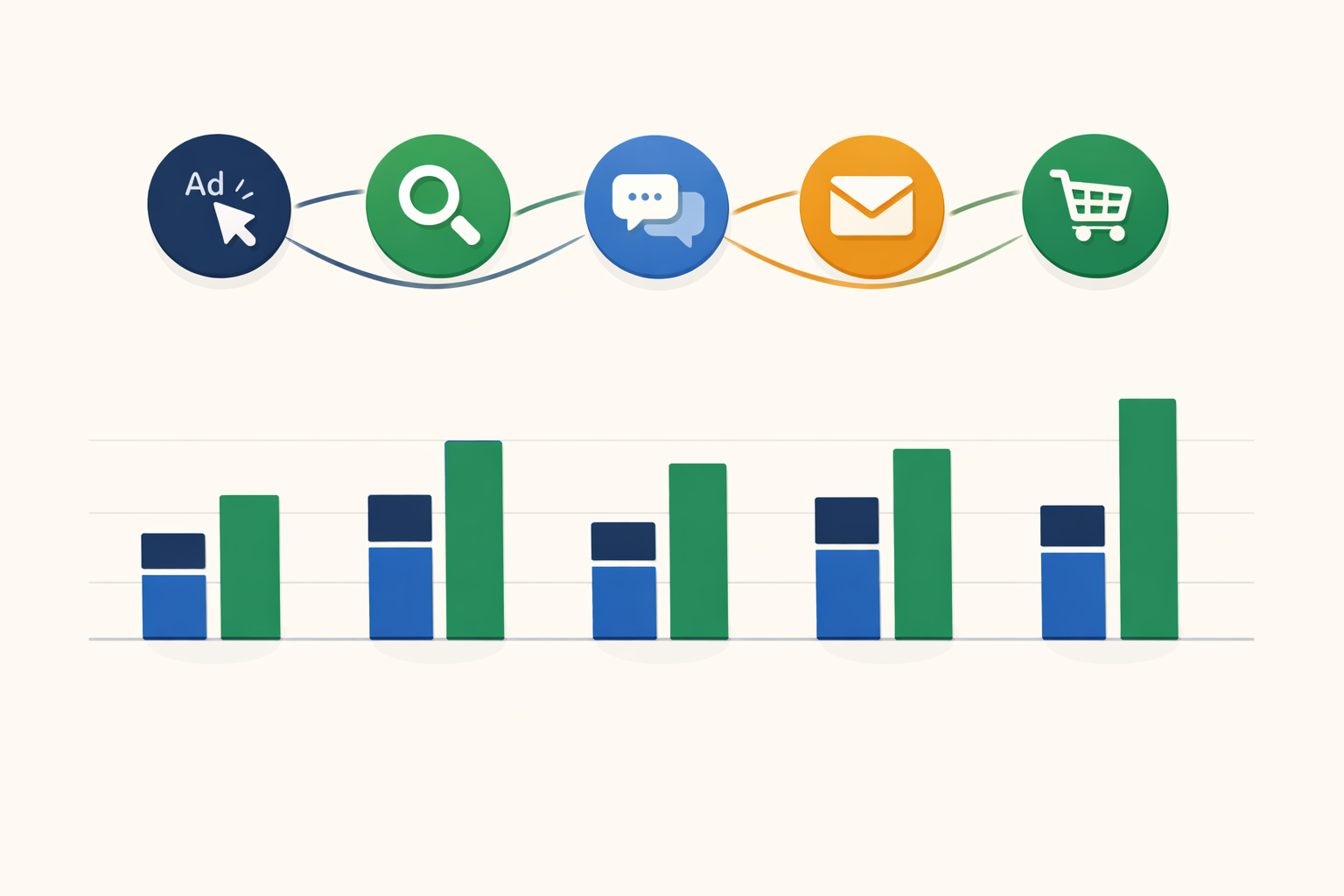
Assisted conversions explained: why a low-ROAS campaign may be opening half your sales journeys, how to see assists in GA4, and the checklist before pausing.
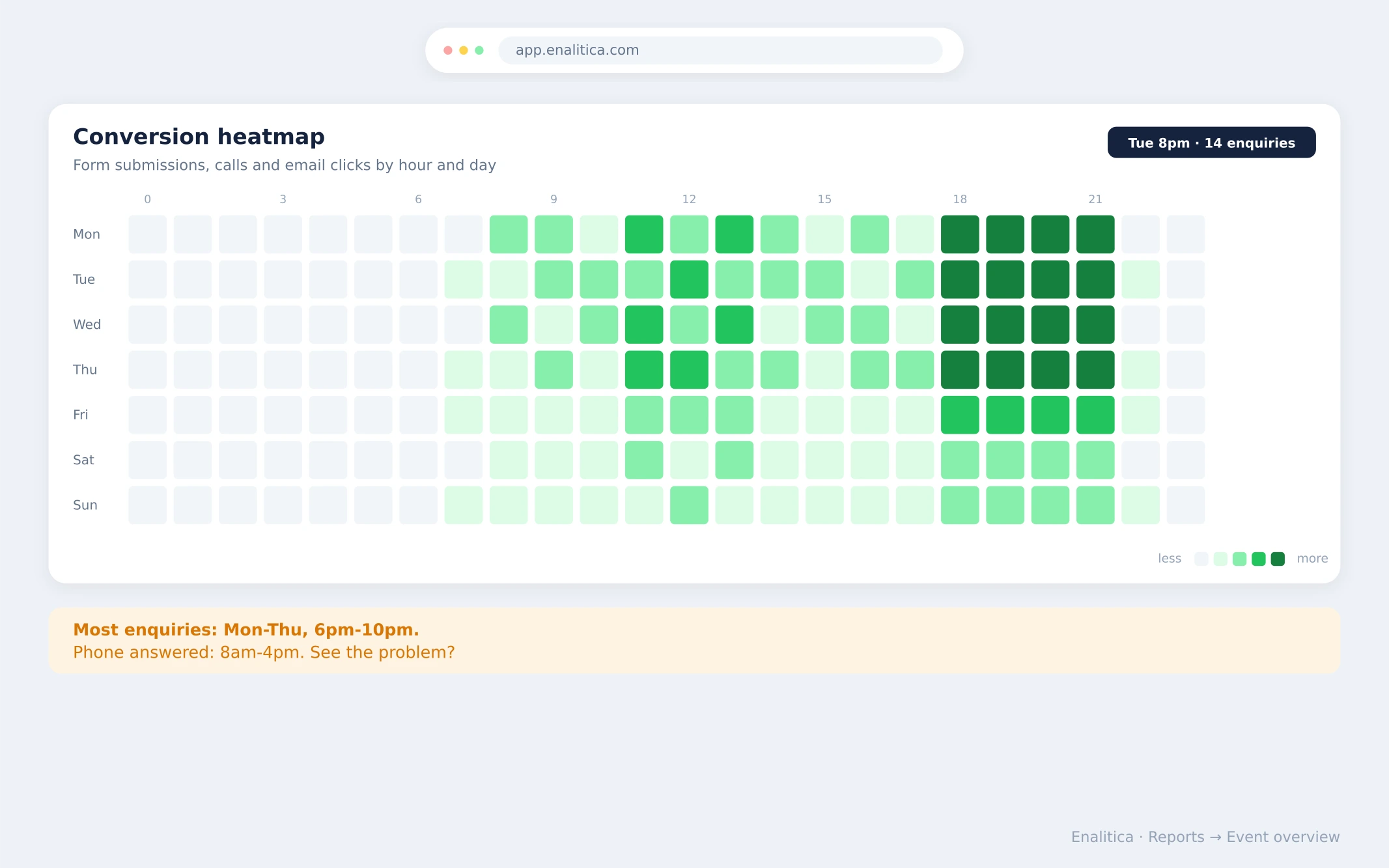
Lead response time decides which enquiries become customers: what the 5-minute rule really says, when enquiries actually arrive, and how to see your own hours.
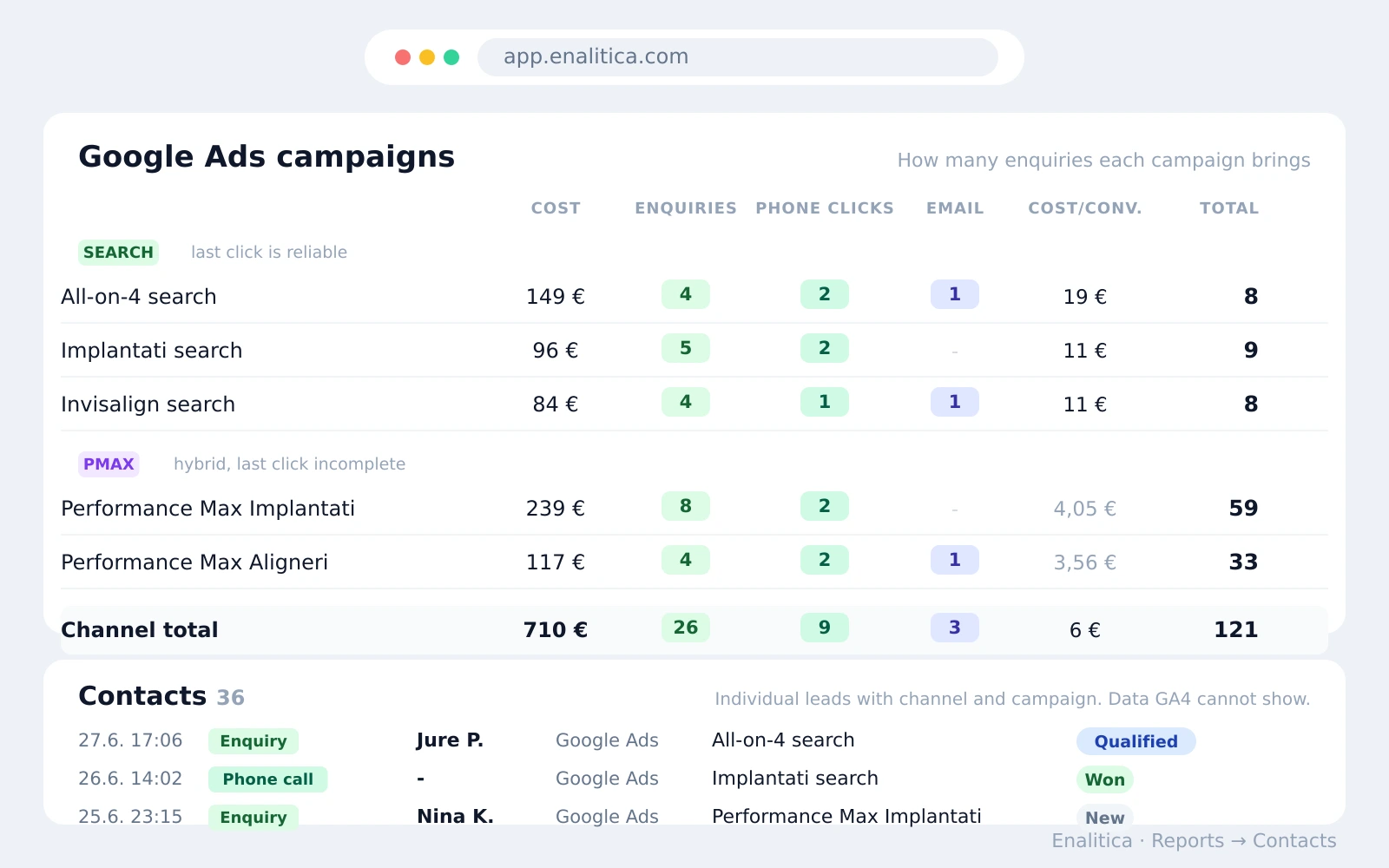
Lead source tracking for service businesses: why GA4 and gut feel disagree, how to see the channel, campaign and keyword behind every enquiry and call.
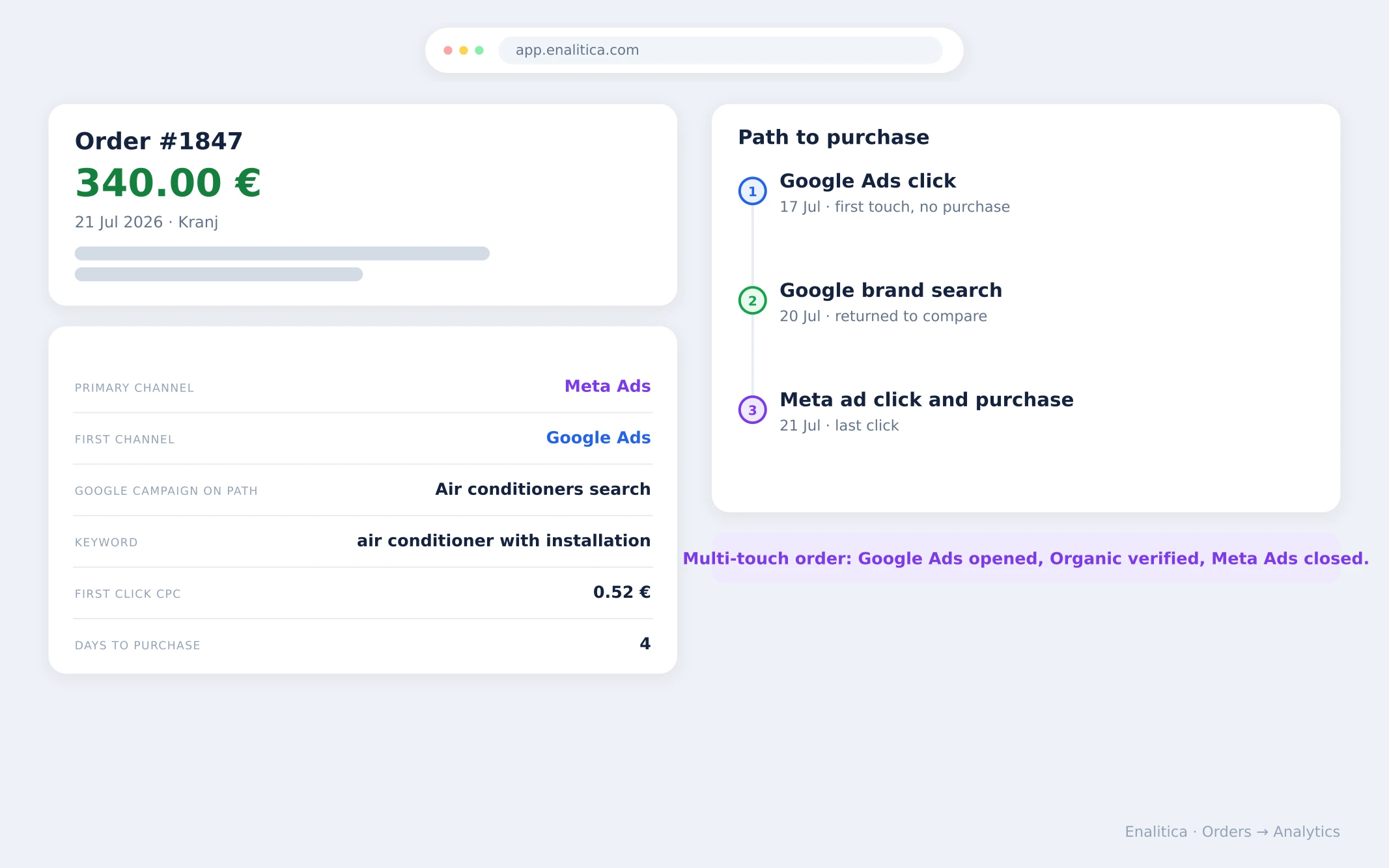
Which ads drive sales: what WooCommerce and Shopify show natively, why it is half the story, and how to see the campaign and keyword behind each order.
POAS vs ROAS: two campaigns with identical ROAS can deserve opposite decisions once returns enter the math. How POAS counts refunds and corrects Google Ads.
How to pick negative keywords that cut real waste without killing terms that quietly assist sales: a 10-minute audit, thresholds and three mistakes.
Meta counts view-through conversions: people who saw an ad and never clicked. Where they hide in Meta and Google reports, and how to measure ROAS without them.
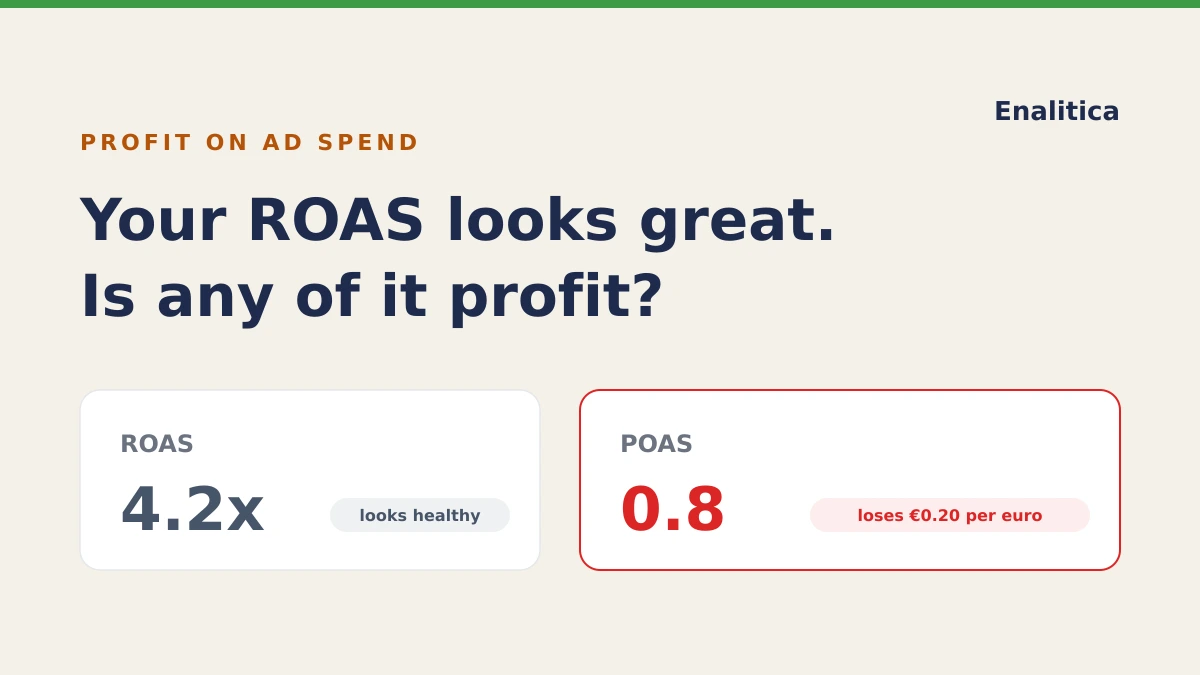
ROAS measures revenue, not profit. POAS divides real profit by ad spend, so break-even is always 1.0. What it is, why it matters in 2026, and how to use it.
Northbeam alternatives compared on vendor pricing (September 2026): cheaper tools for Shopify and WooCommerce, MMM options, AI access, and who each one fits.
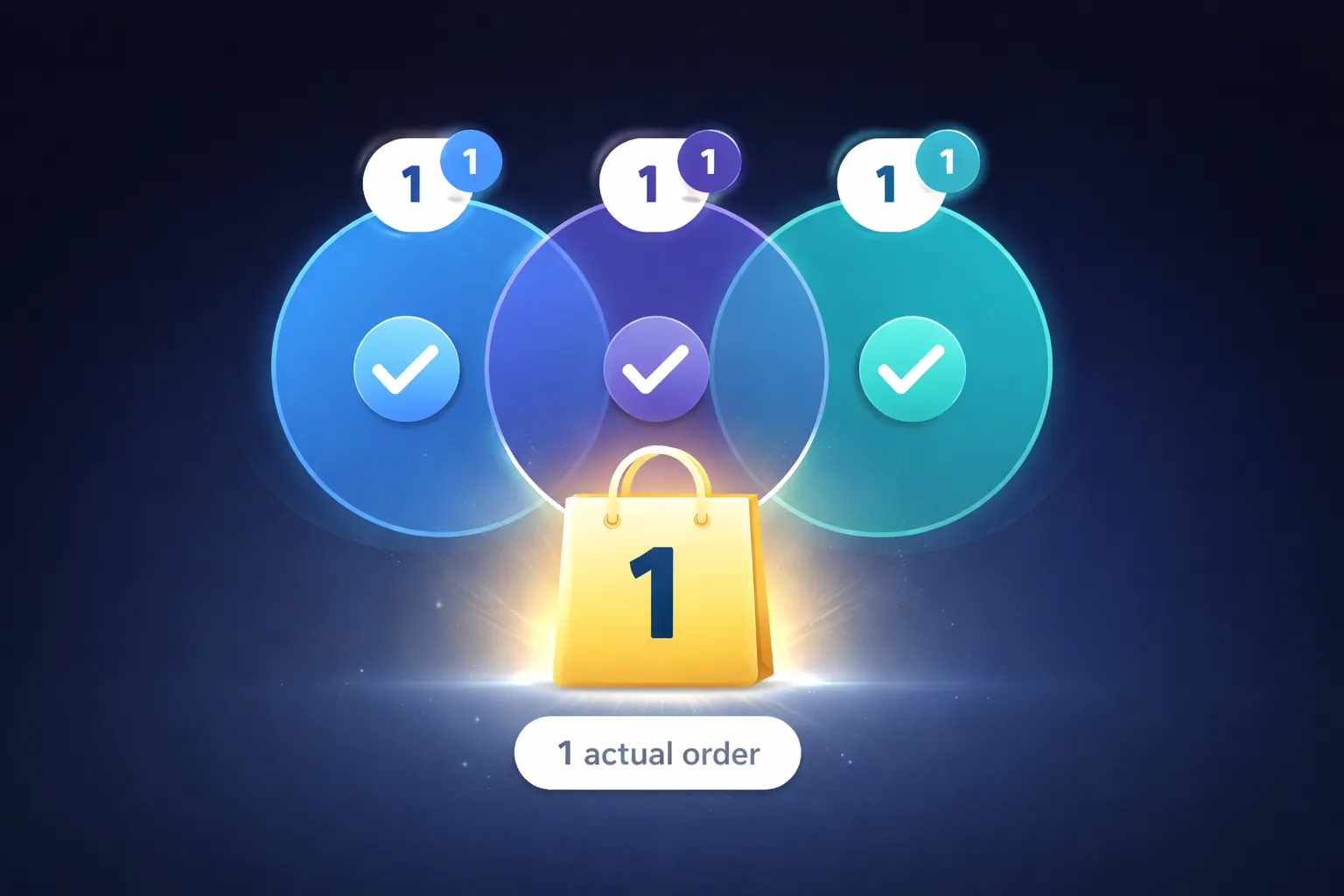
In Enalitica's data, Meta and Google Ads reported as many conversions as stores had orders. What ecommerce attribution is, which model fits, how to reconcile.
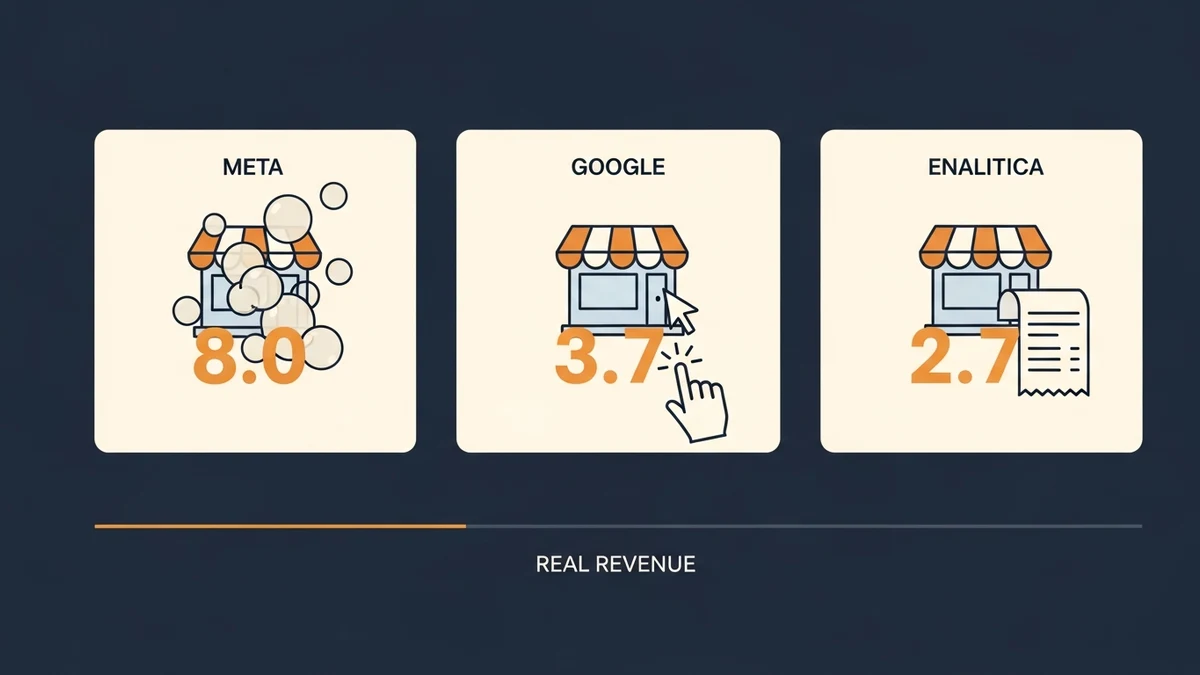
Meta, Google, and Enalitica count conversions differently. Same orders, three ROAS numbers. Here is why and which to trust for spend decisions.
Triple Whale alternatives checked on vendor pricing pages, September 2026: free, cheaper, EU-hosted, profit tracking, what replaces Moby. Where we lose, too.
Learn what linear attribution is, how it splits credit equally, why Google removed it, and how order-based attribution gives you accurate multi-touch data.
Learn what first-touch attribution is, when it works, where it fails, and how order-based attribution gives you accurate first-touch data per order.
What last-touch attribution is, why ad platforms default to it, where it misleads, and how order-based attribution shows the full story behind a sale.
Learn how multi-touch attribution models work, why traditional tracking is breaking, and how order-based attribution gives e-commerce stores the full picture.
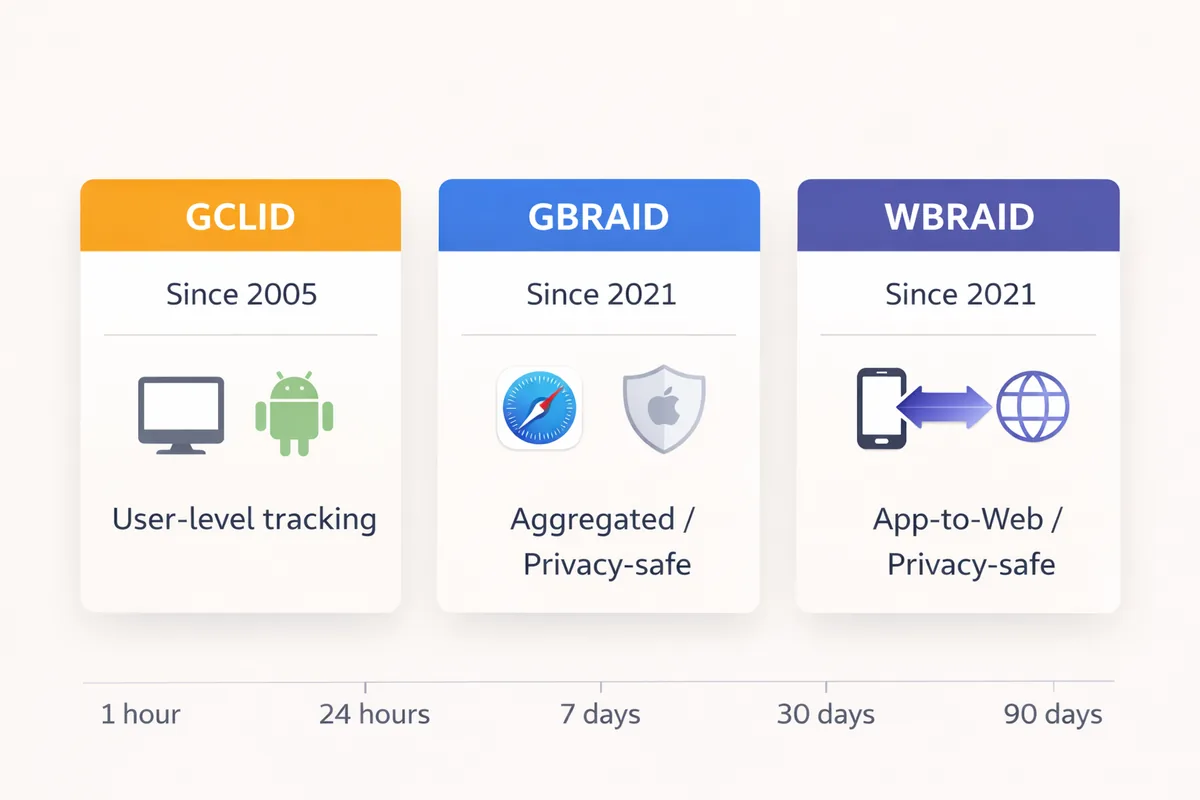
gclid, gbraid and wbraid are Google Ads' three click IDs. Which one lands in your URL, why most clicks now carry two, and how to store all three.
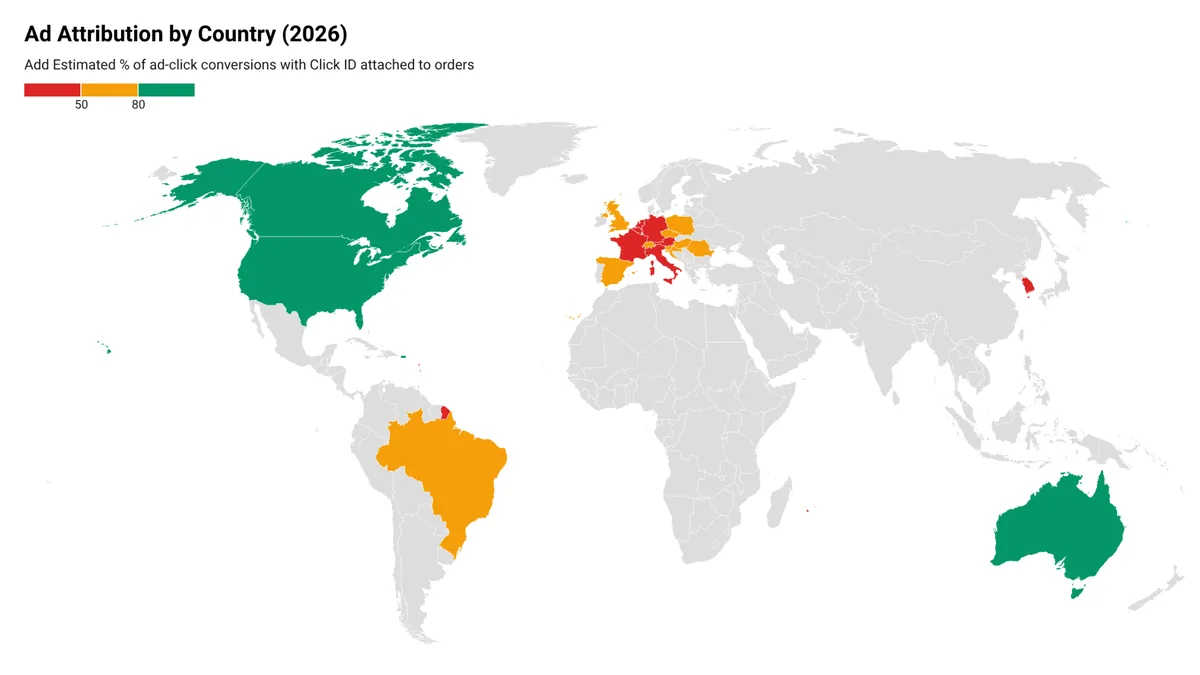
Ad attribution by country varies with cookie consent laws. See how much data you keep in each market, from near-100% in the US to under 40% in France.
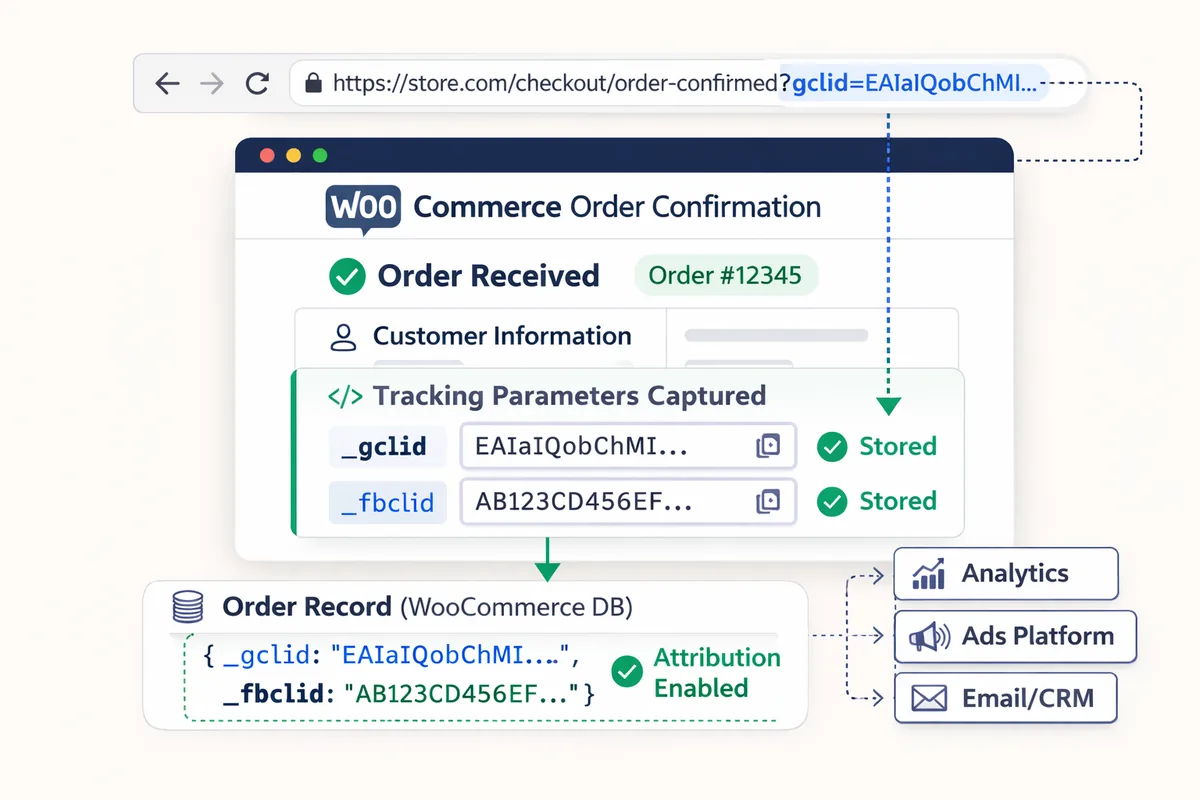
WooCommerce doesn't save Click IDs by default. Learn three methods to capture GCLID/FBCLID for order-level attribution, with GDPR compliance guidance.